Sweden, a land of innovation, sustainability, and thriving business opportunities, is a magnet for entrepreneurs and startups worldwide. Renowned for its cutting-edge technology, eco-friendly initiatives, and highly skilled workforce, starting a business in Sweden provides entrepreneurs with the perfect environment for turning ambitious ideas into successful ventures.
Whether you’re exploring tech startups, green businesses, or e-commerce, Sweden’s stable economy and supportive government policies offer a strong foundation for growth.
If you’re curious about “Which business is best in Sweden?”, then this guide is here to inspire you. Explore the top business ideas to kickstart your journey and succeed in one of the world’s most innovative economies—whether you’re an experienced entrepreneur or starting fresh. Let’s dive in!
Why Sweden is an Entrepreneur’s Haven
Sweden consistently ranks high on global indices for ease of doing business, innovation, and sustainability.
Here are a few reasons why entrepreneurs flock to Sweden:
- Tech-Driven Economy: Sweden is a global leader in technology and innovation. Cities like Stockholm are considered tech hubs, making it ideal for IT startups.
- Green Initiatives: The country’s commitment to sustainability opens doors for green and eco-friendly business ideas.
- Government Support: Sweden offers numerous grants, subsidies, and tax incentives for entrepreneurs.
- High Purchasing Power: The population has a strong appetite for high-quality products and services, making it a lucrative market.
With these advantages, let’s explore the best businesses in Sweden tailored to the current market trends.
Top Business Ideas in Sweden for Foreigners
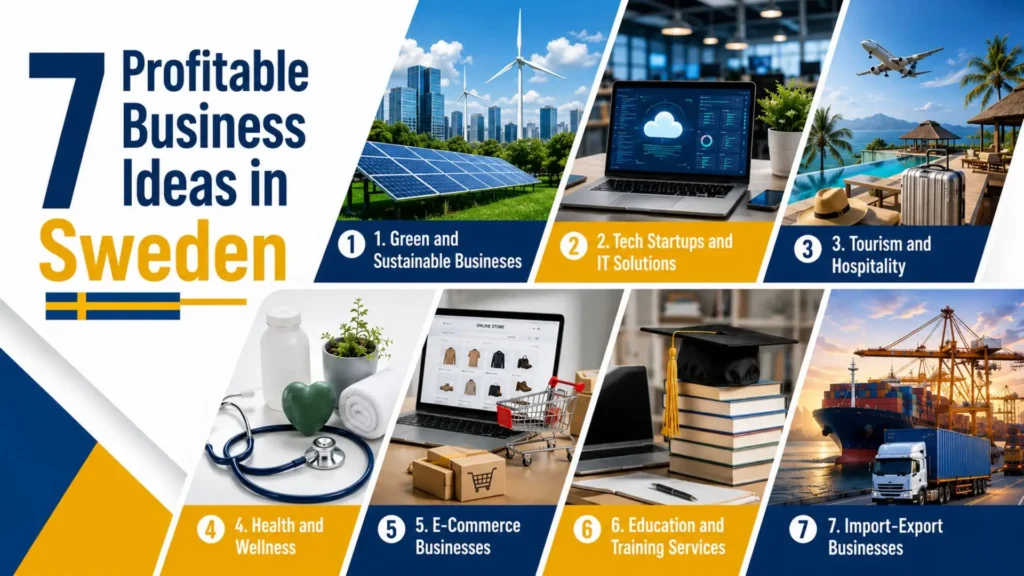
1. Green and Sustainable Businesses
Sweden’s dedication to sustainability creates immense opportunities for eco-friendly businesses. Most foreign founders enter through a private Aktiebolag (AB) — Sweden’s limited liability company, requiring just SEK 25,000 in share capital and open to 100% foreign ownership.
You could consider:
- Recycling and Waste Management Solutions: Offer innovative ways to manage waste or upcycle materials.
- Eco-Friendly Products: Start a business selling biodegradable packaging, organic skincare products, or sustainable home goods.
- Renewable Energy Solutions: Solar installation and similar regulated trades require the installer to hold Swedish electrician certification, even when the company itself is foreign-owned — budget for a certified local hire or partner.
Cleantech ventures can apply to Vinnova (Sweden’s innovation agency) for R&D grants and to Almi Företagspartner for government-backed startup loans once the AB is registered — both are open to foreign-owned companies. If you plan to relocate and run things yourself, non-EU/EEA citizens need a self-employment residence permit from Migrationsverket (majority 51%+ ownership and relevant industry experience required); EU/EEA and Swiss citizens can start trading with no permit at all.
2. Tech Startups and IT Solutions
Sweden is a breeding ground for tech companies, with successful startups like Spotify and Klarna originating here. This is also the sector with the lightest visa burden for non-EU founders: you can register and own a Swedish AB remotely and run it from abroad without a residence permit, as long as you’re not physically working from Sweden day to day.
If you’re tech-savvy, consider:
- App Development: Create apps tailored to Sweden’s digital-first market.
- AI and Machine Learning: Businesses are eager for AI-driven tools to optimise operations.
- Cybersecurity Services: With increasing digitisation, demand for robust cybersecurity solutions is on the rise.
Tech and life-sciences ventures can apply to Vinnova for R&D grants regardless of founder residency. The calculation changes once you want to move to Sweden and work in the business yourself (self-employment permit, 51%+ ownership) or start hiring local staff — Sweden tightened work permit rules for employees from 1 June 2026, so build in extra lead time if hiring is part of your growth plan.
3. Tourism and Hospitality
Sweden’s picturesque landscapes, Northern Lights, and rich cultural history make it a hotspot for tourists. Unlike remote-friendly tech or e-commerce, this sector generally requires you to be on the ground — so non-EU/EEA founders should plan for the self-employment residence permit alongside standard AB registration.
Business opportunities in this sector include:
- Boutique Hotels and Hostels: Cater to travellers seeking unique and affordable accommodations.
- Tour Guide Services: Offer curated experiences, including city tours, hiking trips, and winter sports adventures.
- Eco-Tourism Ventures: Provide sustainable travel experiences focusing on Sweden’s natural beauty.
Any venue serving food must register with its municipality under Sweden’s food safety framework before opening, and serving alcohol requires a separate municipal serving licence (serveringstillstånd) — both sit on top of your standard Bolagsverket company registration.
4. Health and Wellness
Swedes value health and fitness, making this a thriving sector — but the regulatory lift varies a lot by offering.
Popular ideas include:
- Fitness Studios and Yoga Classes: Unregulated wellness activities like these need no professional licence beyond standard company registration.
- Organic Food Stores: Supply fresh, organic produce and health supplements, registered with your local municipality under Sweden’s food safety rules.
- Mental Health Services: Regulated professions — doctors, nurses, psychologists, physiotherapists — need individual authorization from Socialstyrelsen (the National Board of Health and Welfare) before practising, and the business itself must notify IVO, the Health and Social Care Inspectorate, at least one month before care services begin.
Because most of these involve hands-on service delivery, non-EU/EEA founders running the operation themselves will typically need the self-employment residence permit alongside company registration.
5. E-Commerce Businesses
With Sweden’s tech-savvy population and high internet penetration, e-commerce is booming — and like tech startups, it’s one of the more accessible sectors for founders who don’t want to relocate: an AB can hold stock, sell, and pay Swedish VAT without its owner living in the country.
Consider selling:
- Fashion and Accessories: Focus on sustainable or niche fashion products.
- Home Decor Items: Scandinavian-inspired designs are always in demand.
- Speciality Food Products: Market unique, local, or organic foods to Swedish customers — food products need registration with the food safety authority before sale, even online.
Standard VAT (moms) is 25%, with reduced rates of 12% and 6% for certain categories; register with Skatteverket once your AB is formed. As with tech, you’d only need the self-employment residence permit if you plan to move to Sweden and run day-to-day operations yourself.
6. Education and Training Services
Sweden’s focus on lifelong learning creates demand for innovative education services.
Explore:
- Online Learning Platforms: Offer courses in tech, business, or language skills — deliverable and ownable remotely under a standard AB, much like an e-commerce or SaaS business.
- Corporate Training Programs: Provide companies with workshops on leadership, diversity, or digital transformation.
- Coding Bootcamps: Teach programming to meet demand for tech talent.
Private tutoring, coaching, and corporate training generally don’t need sector-specific licensing beyond company registration — that changes only if you intend to issue formally recognized qualifications, which involves separate approval.
As with the other hands-on sectors, non-EU/EEA founders teaching or running sessions in Sweden themselves should plan for the self-employment permit.
7. Import-Export Businesses
Sweden’s global trade networks make import-export ventures highly profitable.
You can:
- Export Scandinavian Products: Sell Swedish furniture, food, or fashion abroad.
- Import Niche Goods: Bring in speciality items from Asia, Africa, or South America to cater to Sweden’s multicultural population.
Entity choice often differs here: an already-established foreign company can register a branch office (filial) in Sweden instead of incorporating a fresh AB, keeping the business tied to the parent company’s legal identity.
Whichever structure you use, any company moving goods across the EU’s external border needs an EORI number and must register with Tullverket (Swedish Customs) before shipments can clear.
Which Business is Best in Sweden?
The “best” business in Sweden depends on your expertise, resources, and market demand.
However, here’s a summary of top-performing sectors:
- Tech Startups: High demand for innovation and digital solutions.
- Sustainability-Focused Ventures: Perfect for eco-conscious entrepreneurs.
- Tourism-Related Businesses: Lucrative, especially in high tourist seasons.
- Health and Wellness: A steadily growing market.
If you’re still wondering “Which business is best in Sweden?”, start by assessing your passion and aligning it with market trends.
Conclusion
Sweden’s vibrant economy and innovative culture provide an excellent platform for entrepreneurs and startups to thrive. From tech startups to green businesses, the country offers diverse options to suit various interests and skill sets. If you’re wondering, “Which business is best in Sweden?”, the answer lies in your passion, market research, and alignment with Sweden’s values of sustainability and innovation.
With the right planning and execution, you can transform your idea into a successful venture in this Nordic gem. Ready to take the leap? Start exploring your opportunities and let Sweden’s business-friendly environment work in your favour!
Connect with our experts today for more information.
FAQ’s
Is Sweden a good place to start a business?
Yes, Sweden offers a business-friendly environment with government support, a highly skilled workforce, and a thriving economy, making it an excellent place for startups and entrepreneurs.
Which business is best in Sweden?
The best businesses in Sweden depend on your skills and interests, but top industries include tech startups, eco-friendly ventures, tourism, and health and wellness.
What are some unique business opportunities in Sweden?
Sweden’s focus on innovation and sustainability opens doors for green businesses, renewable energy solutions, AI-driven tech startups, and import-export ventures.
What is the process of registering a business in Sweden?
The process involves selecting a business structure, registering your company with the Swedish Companies Registration Office (Bolagsverket), and obtaining the necessary permits or licenses.