
What is the International Digital Mobility Program (IDMP)?
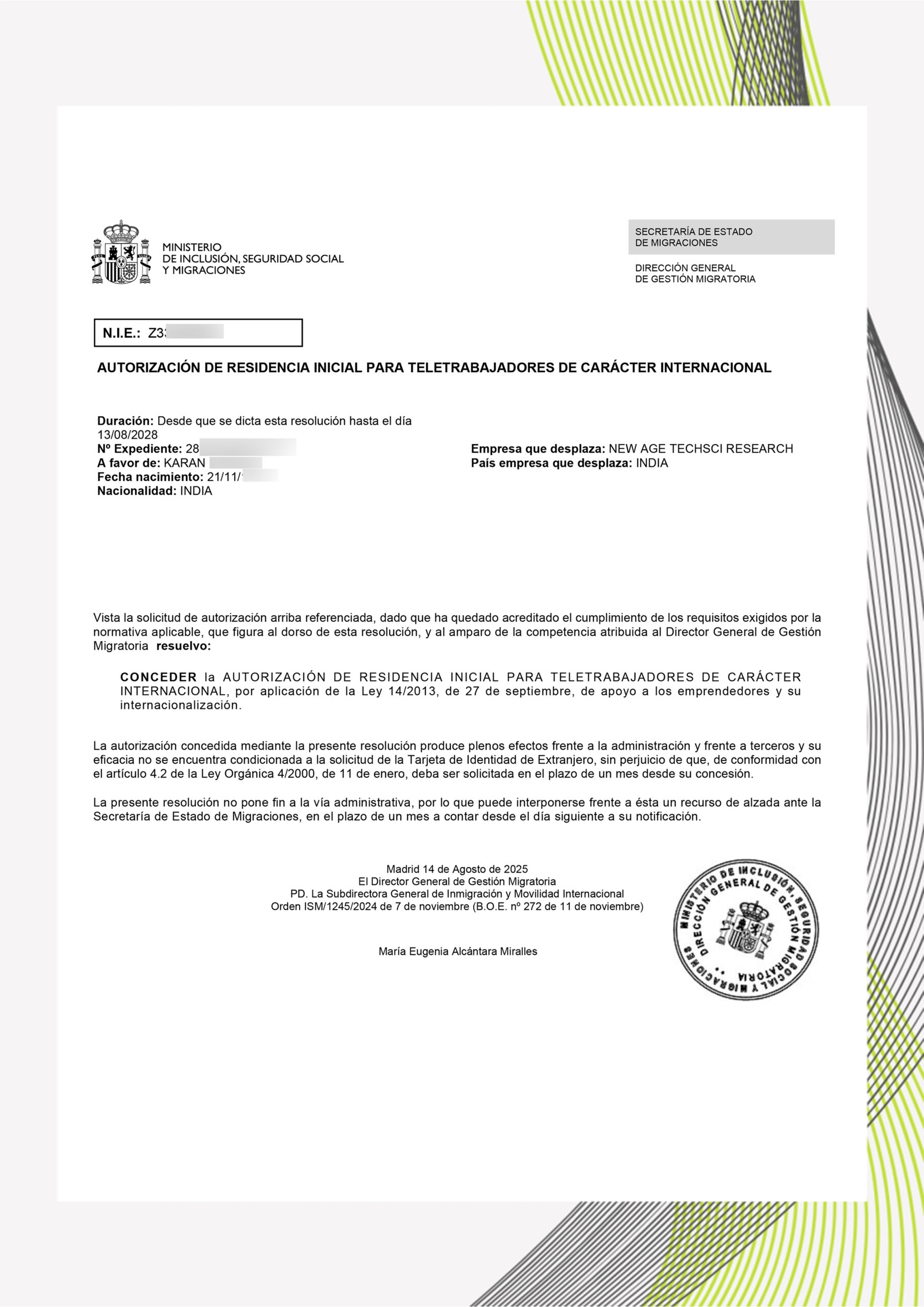
IDMP (International Digital Mobility Program) is a premium residency pathway designed for financially solvent non-EU applicants seeking seamless access to Europe. Through this program, eligible applicants can obtain a 1+2-year Spanish Residence Visa, granting visa-free mobility across the entire Schengen region.
Unlike traditional immigration routes, IDMP offers unmatched flexibility as you’re not required to incorporate a business immediately. Instead, you can secure your residency first and choose to establish a Spanish entity later, at your convenience.
Requirements
- At least €2,760–2,763 (~₹2.8 lakh) monthly income from non-Spanish sources.
- Valid university degree or minimum 3 years of relevant work experience.
- Proof of full-time remote employment with a foreign company or freelance contracts/invoices. Up to 20% of income may come from Spanish clients.
Your European residency journey starts here.
Documents
Required
Prepare the following documents carefully to ensure a smooth IDMP application process.
All Documents
- Passport (Complete Copy) All pages, valid for at least 1 year
- Resume / CV Updated with relevant work experience
- Employment Contract / Offer Letter From a foreign employer or freelance clients
- Educational Certificates Bachelor’s / Master’s degree
- Bank Statements (3 months) Minimum €2,760/month (INR 2.8 Lakhs)
- Payslips (Last 3 months) To prove steady income
- Police Clearance Certificate (PCC) Regional Passport Office only
- Private Health Insurance With coverage in Spain
- Visa Application Form Filled and signed
- Company Documents / GST Certificates Business or tax registration
- ITR for 3 Years Income Tax Returns – last three years
Step-by-Step
Process for IDMP
-
Step 1
Profile Qualification & Enrollment
The journey begins with a thorough evaluation of the candidate’s professional profile to ensure eligibility for Spain’s Digital Nomad Visa. Once the profile meets the necessary criteria, the applicant is formally enrolled into the International Digital Mobility Program (IDMP) by OnDemand International.

-
Step 2
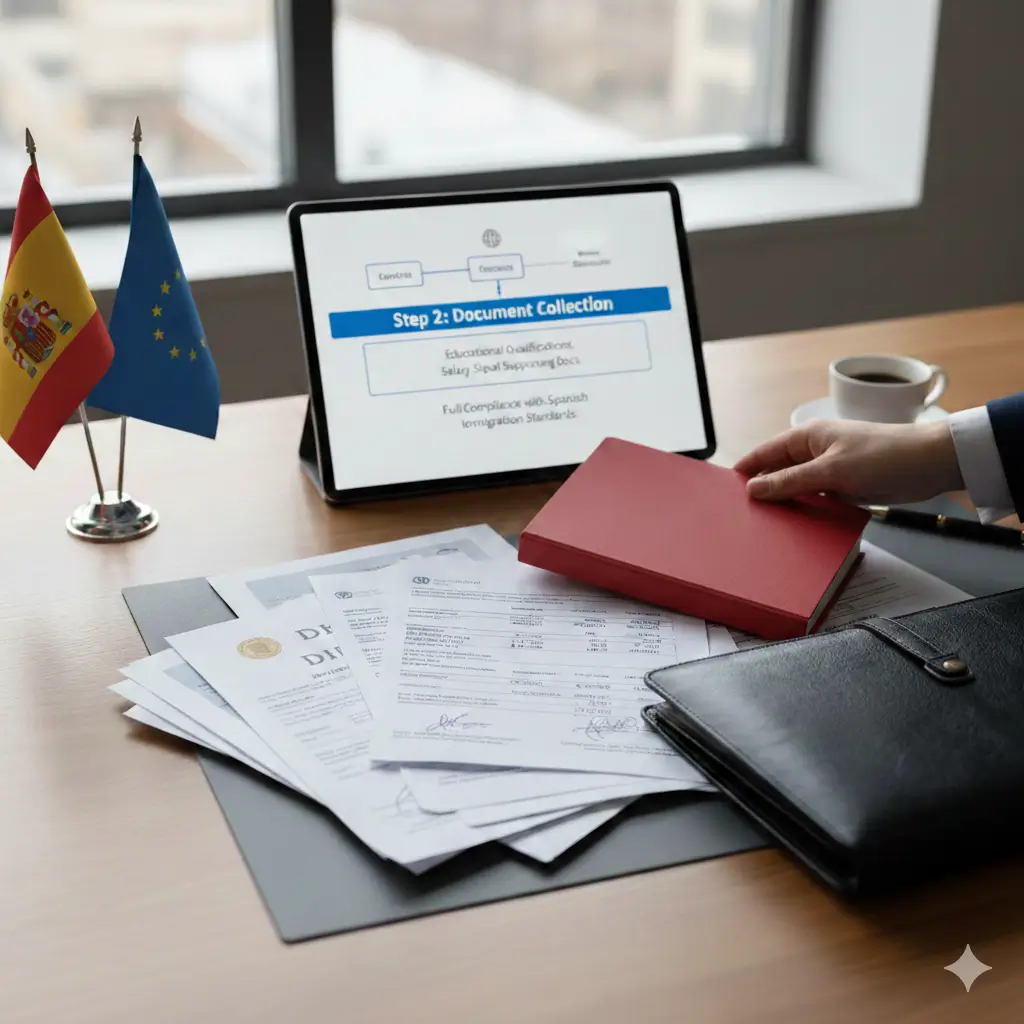
Document Collection
Once the candidate qualifies, the documents must be gathered which includes educational qualifications, salary slips, and any additional supporting documents as required. OnDemand International manages the entire documentation workflow to ensure compliance with Spanish immigration standards.
-
Step 3
Legalization & Tax Formalities
The required documents are collected, then duly apostilled and sworn translated in accordance with Spanish legal standards. At the same time, Form 790 (Spanish Tax) is processed and the payment is handled by OnDemand International’s legal team to ensure full compliance with Spanish tax regulations.

-

Step 4
Travel to Barcelona & Legal Onboarding
The prospect must travel to Barcelona to complete in-person onboarding with OnDemand International’s legal representatives. A recommended stay of approximately 3 to 4 days ensures the smooth and timely completion of all necessary legal formalities.
-
Step 5
Police KYC & Immigration File Submission
A swift Police KYC and Police Clearance Certificate (PCC) process is completed within approximately 3 hours. On the same day, the full immigration file is submitted in person, with comprehensive legal support provided by OnDemand International.

-

Step 6
Residency Approval Waiting Period
Following the successful submission of the complete immigration file, the application enters the official review stage with Spain’s immigration authorities. The standard processing time is approximately 20 business days, though this may vary slightly based on the volume of applications. This is the final review phase before initial residency approval is granted.
-
Step 7
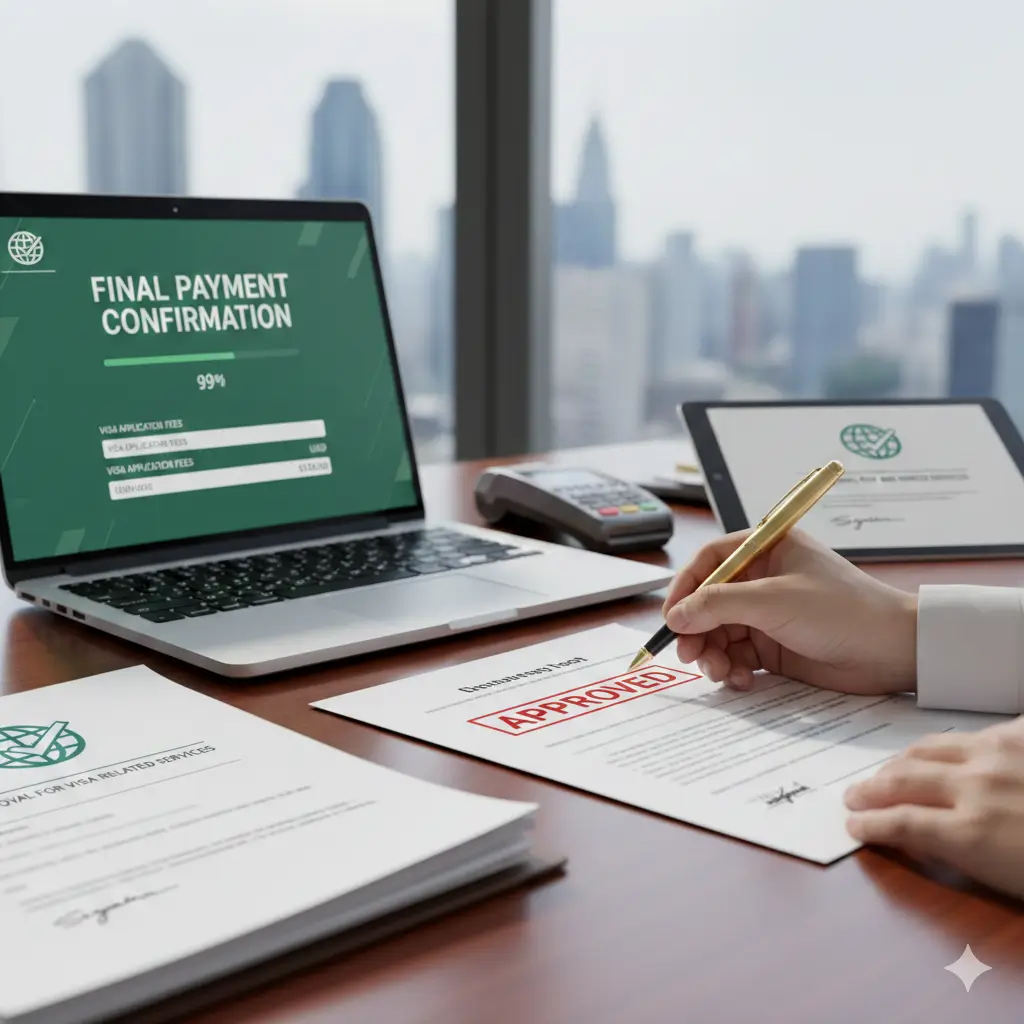
Approval & Final Payment
Once the Initial Residency Approval is granted—valid for 3 years—the applicant receives formal notification from OnDemand International. The applicant is issued an official residency approval confirmation, completing the legal validation of their stay in Spain.
-
Step 8
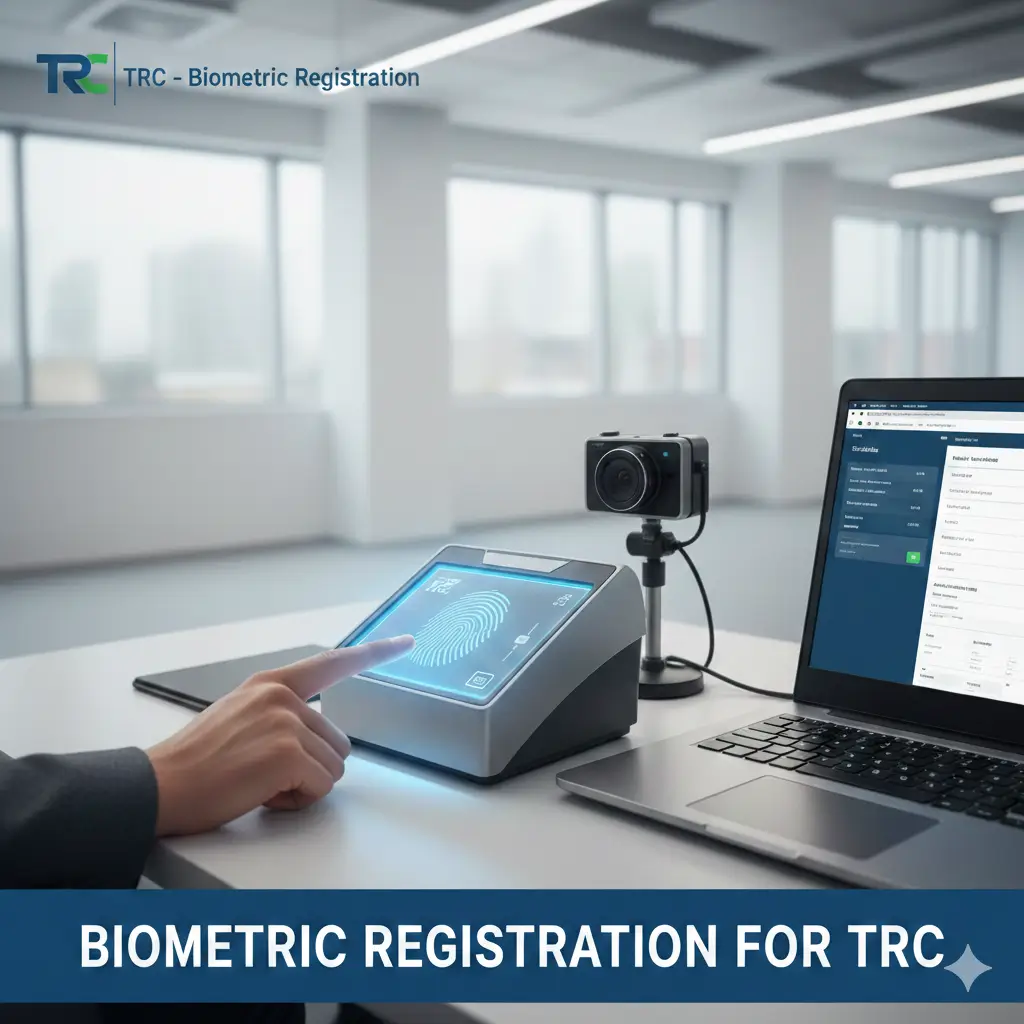
Biometric Registration for TRC
After receiving approval, the applicant proceeds to complete biometric registration required for the issuance of the TRC (Tarjeta de Residencia para Extranjeros) — Spain’s official residency card. The TRC provides legal residency status, enables travel across the Schengen zone, and grants access to services such as tax registration, banking, and public or private healthcare.
Key Benefits for Indian Professionals
A comprehensive framework designed for remote professionals and entrepreneurs seeking European mobility with exceptional fiscal advantages.
Family Inclusion
Applicants may relocate to Spain with their spouse, registered partner, and dependent children, ensuring family unity while pursuing professional opportunities abroad.
Preferential Tax Regime
Opt into Spain’s Beckham Law — a reduced flat rate of 24% on income up to €600,000 for up to six years. An exceptionally attractive fiscal environment for high-earning professionals.
Schengen Zone Access
Enjoy visa-free travel across all 26 Schengen countries, enabling seamless mobility for personal and professional engagements throughout Europe.
Route to Residency & Citizenship
A clear pathway to permanent residency after five years. Applicants may pursue Spanish citizenship after ten years of continuous residence, subject to standard naturalization requirements.
High Standard of Living
Spain delivers robust infrastructure, world-class healthcare, renowned educational institutions, modern digital connectivity, and a stable business environment — ideal for remote professionals.
Conclusion
The International Digital Mobility Program (IDMP) is more than just a visa — it is Spain’s gateway for remote professionals, freelancers, and entrepreneurs to build a sustainable international career while enjoying one of Europe’s most vibrant lifestyles.
With clear eligibility requirements, a structured application process, and benefits such as family relocation, preferential taxation, and Schengen mobility, the IDMP offers Indian applicants a unique opportunity to establish roots in Spain while maintaining global work flexibility.
Most importantly, it provides a direct pathway to permanent residency and eventual citizenship, making it an ideal choice for those seeking long-term stability and growth in Europe.
Start Your IDMP Journey
with Expert Guidance
Start Your IDMP Journey with OnDemand International
FAQs
Who can apply for the International Digital Mobility Program (IDMP)?
Remote workers, freelancers, and self-employed entrepreneurs who earn a minimum monthly income of €2,760 (~₹2.8 lakh) from non-Spanish sources are eligible. Additionally, candidates must be university graduates or possess at least three years of relevant job experience.
Can Indian applicants include their family in the application?
Yes. The IDMP allows applicants to relocate with their spouse/registered partner and dependent children, ensuring family unity in Spain.
How long is the initial residency permit valid under the IDMP?
The initial approval for residency lasts for three years. It can be extended after this time, finally granting permanent residency after five years and Spanish citizenship after ten years of continuous residence.
What percentage of my income can come from Spanish clients?
Candidates must have overseas clients or employers for the remaining portion of their income, with up to 20% coming from Spanish sources.
What happens after approval of the Spain Digital Nomad Visa for Indians?
Applicants must complete biometric registration for the TRC (Temporary Residency Card), which provides legal residency status, access to healthcare, tax registration, banking services, and Schengen mobility.
Can the program help me transition to permanent settlement in Spain?
Of course. IDMP holders are eligible to apply for permanent residency following five years of continuous legal presence. They can petition for Spanish citizenship after ten years, if they meet the usual standards.