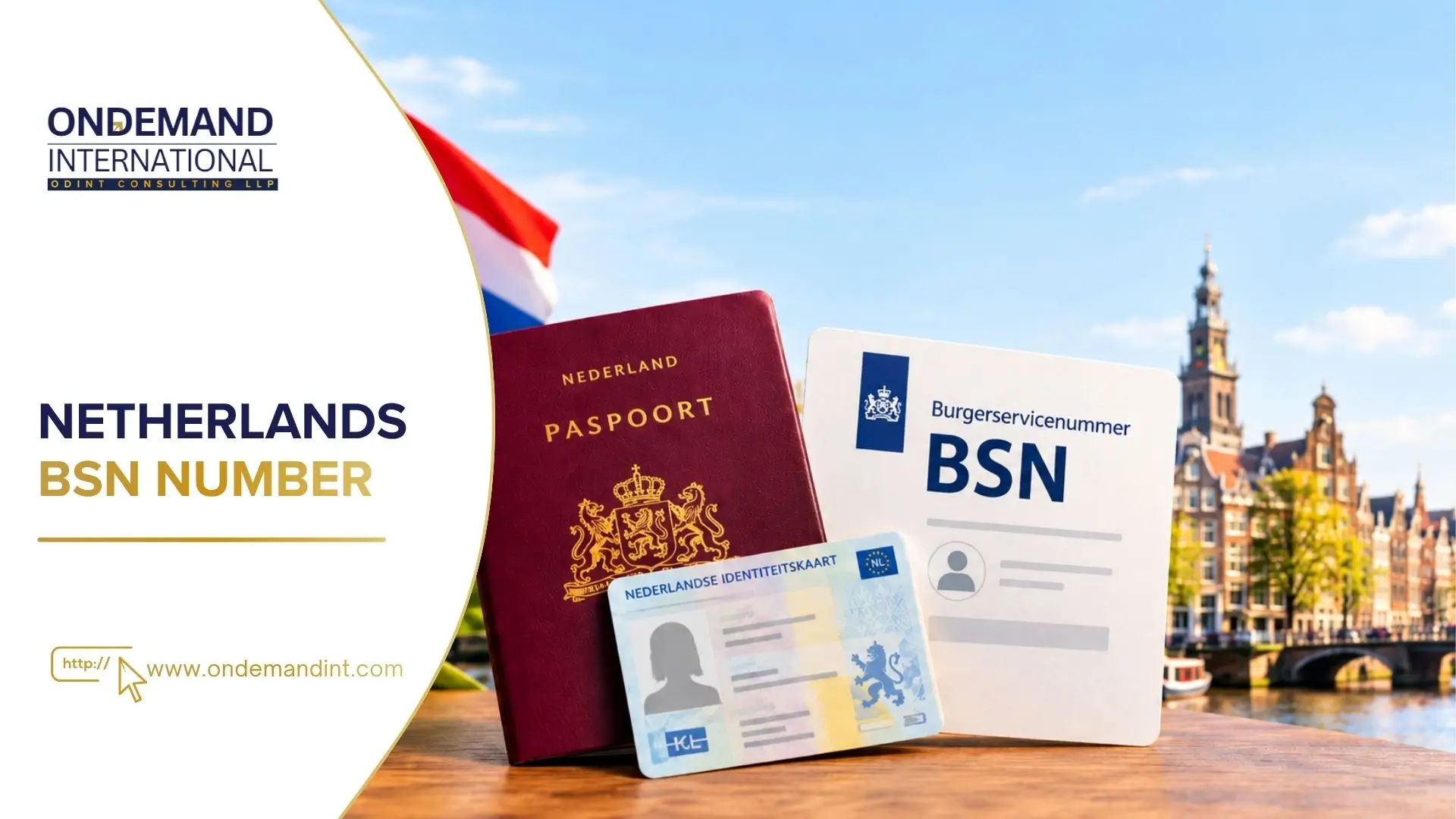
The Netherlands BSN number (Burgerservicenummer) is a significant personal identification number for administrative purposes in the Netherlands. A BSN may be required in interactions with government officials, health care, tax authorities, employment administration, and other official services of the Dutch state.
When you move to the Netherlands for more than four months, you are generally issued a BSN after you register with the municipality and are registered in the Personal Records Database (BRP). If you are not a resident of the Netherlands or stay for a shorter period than 4 months, you can obtain a BSN by registering in the Non-residents Records Database (RNI).
Knowing how the BSN is obtained, where to obtain it, and what it can be used for can make moving or staying in the Netherlands much easier.
What is a BSN number?
BSN stands for Burgerservicenummer, which means citizen service number Netherlands. It is a unique personal number assigned to people who are registered in the Dutch Personal Records Database (BRP). The RNI also issues BSN to eligible non-residents who register through the RNI.
A Netherlands BSN number is necessary if you want to live, work, and get benefits in the Netherlands. It is used in interactions with the Dutch government organisations and is important for administrative purposes like tax, healthcare, education, and government benefits.
The BSN is often referred to as the Dutch equivalent of a social security number in English-language searches. However, its official name is the citizen service number Netherlands.
If you already have a BSN but do not remember the number, you will find it in your Dutch passport, identity card, or driving licence.
Read More: Unemployment Benefits Scheme in the Netherlands
What’s the use of the BSN number?
BSN Number is not only used by the government to process your personal information, but it is also used for various other administrative procedures such as opening a bank account, getting health insurance, getting housing benefits, and combating fraud. This number will let an individual access different services and facilities from different sectors such as insurance, banking, healthcare, etc.
The BSN is mainly used to identify you when dealing with Dutch government organisations. It is used for areas such as tax administration, healthcare, education, employment administration, and certain government benefits. Recognised healthcare providers and health insurers also use the BSN where required by law.
A BSN number creates contact between government authorities and an individual. With the help of Netherlands BSN numbers, the Dutch government tries to provide maximum protection for your privacy and improve services for you.
How to Apply and Get a BSN Number?
The process for getting a BSN number Netherlands depends mainly on how long you intend to stay in the country. Follow the relevant registration process below:
Step 1: Determine Which Registration You Need
When you plan to stay in the Netherlands for over four months, you should register as a resident with the municipality where you are going to reside. When staying in the Netherlands for less than four months or living abroad, it is possible to register as a non-resident via the RNI.
Step 2: Register With Your Dutch Municipality
If you are going to stay in the Netherlands for longer than four months, please contact the municipality in which you will live and arrange an appointment for registration. Registration is usually required within five days of your arrival in the Netherlands.
During registration, your personal details are entered into the BRP. If you do not already have a BSN, you will receive one as part of this registration.
Step 3: Prepare Your Identification Documents
You will need valid identification, such as a passport or identity card. Depending on your circumstances, the municipality may also ask for additional documents. It is therefore best to check the requirements with your municipality before the appointment.
Step 4: Use RNI If You Are Staying Less Than Four Months
If you are staying in the Netherlands for less than four months or live outside the Netherlands but need a BSN, you can register at an RNI desk. There are 19 municipalities with RNI desks. Registration must be completed in person, and you normally need to bring a valid passport or identity card.
Step 5: Receive Your BSN
After completing your registration, you will receive your BSN. For BRP registration, the BSN is issued through the municipality. For RNI registration, the RNI desk provides a letter containing your BSN.
The BSN itself is free of charge. However, appointment availability and the time required for registration can vary depending on your municipality and individual circumstances.
What If I Lost My BSN Number?
If an individual loses his/her BSN number, there is no worry as there are many other documents that show the BSN number, hence you can check it from there as well.
If you forget or lose your BSN, you will not need to apply for a new BSN. It can be found in your passport, ID card, driving licence, payslip, health insurance, or MijnOverheid. If you are registered through the RNI, you can also request information about your registration from an RNI desk.
How Long Is a Netherlands BSN Number Valid?
A Netherlands BSN remains valid throughout your life. Your BSN does not expire when you leave the Netherlands, and you will keep using the same number when you come back.
If you move out of the Netherlands and want to deregister from the municipality, your personal registration can be transferred to the RNI. This changes your registration status but does not change your BSN.
What’s DigiD?
The DigiD is a kind of online ID used as a medium to provide access to local services and government websites; it’s like having a digital identity proof. The DigiD is linked to a BSN number; EU and non-EU citizens (only if they have a BSN number) can apply for it.
BSN and DigiD serve different purposes. Your BSN is your personal citizen service number Netherlands, while DigiD is a digital identity used to log in to participating Dutch government services online. A BSN is required when applying for DigiD.
How Long Does the Process Take and How Much Does It Cost?
The process of obtaining a Netherlands BSN number is very easy from start to finish if you have all the documents that are required, and it doesn’t take long.
The processing time is not the same for each applicant. Registration time may vary depending on whether you register at the municipality or the RNI desk and on the availability of appointments.
Obtaining a BSN itself is free of charge. However, other documents or services related to your registration or relocation may have separate costs.
Read More: Netherlands 30% Ruling
Conclusion
The main thing in obtaining a Netherlands BSN number is to go through the proper registration procedure. People who move to the Netherlands for more than four months can usually get their BSN via municipal registration, and people living abroad or staying for less than four months can usually obtain a BSN via the RNI route. Once you have your BSN, keep the number safe because it remains your personal identification number and can be used again if you return to the Netherlands.
Knowing where to find your BSN and when it is required can also help you manage everyday administrative tasks more efficiently. If you need professional assistance with your Netherlands setup and related registration requirements, OnDemand International can help you navigate the process. Contact our Netherlands experts to discuss your requirements.
FAQs
Will the BSN number leak my personal information?
Information that is given by you during registration can’t be used by any institution unless permitted by law.
What’s a Sofi number?
BSN numbers were previously known as ‘Sofi’ numbers, which used to be issued by Dutch tax authorities. But from Nov 2007, the Sofi number was converted to the BSN number, and from January 2014, Dutch tax authorities stopped using the Sofi number.
In order to work in the Netherlands, can I just use a BSN number?
To work in the Netherlands, one needs to have a work permit; having just a BSN number won’t permit you to work in the Netherlands
Can I receive a BSN while living abroad?
EU members can get a BSN number while they are living outside the Netherlands by making an appointment with the municipality with the help of their current EU address. You’ll receive a temporary BSN number, but that will be valid only for 4 months.
How much does the process of getting a BSN number cost?
This whole process is completely free of cost; the Dutch government takes care of it.