Best State to start a business in the USA 2026
Starting a business in the United States offers tremendous opportunities — but the state you choose to incorporate in can significantly impact your taxes, legal protections, startup costs, and long-term growth.
This guide breaks down the 6 best states to start a business in the USA, along with the key factors every entrepreneur should evaluate before making that decision.
Key Factors to Consider When Choosing the Best State to Start a Business
Every entrepreneur weighs different priorities. Below are the seven most important factors to evaluate when selecting the best state to register or incorporate your business in the USA.
- Business Location & Market Access — A strategically chosen location attracts clients, talent, and investors. It also affects your business’s visibility, supply chain access, and customer reach. Proximity to major economic hubs can accelerate early-stage growth.
- Business Plan Alignment — Your business plan should align with the state’s economic environment and industry strengths. A well-matched location supports your growth projections and makes it easier to secure local financing or partnerships.
- Business Structure (LLC, Corporation, etc.) — The LLC structure is widely preferred in the USA for its flexibility and liability protection. Many states allow LLCs to operate remotely, meaning you can incorporate in a business-friendly state without a physical presence there.
- State Tax Climate — Tax obligations vary widely by state. Some states impose no income tax or corporate tax, while others levy multiple layers of taxation. Understanding each state’s tax structure is critical before you register.
- Startup & Operating Costs — Registration fees, annual filing costs, office space, and cost of living all affect your bottom line. Entrepreneurs with limited capital should prioritize states with low startup financial requirements.
- Legal Environment & Business Laws — Familiarity with a state’s commercial laws, dispute resolution mechanisms, and corporate governance rules helps protect your business and reduces legal risk in the long run.
- Workforce & Talent Pool — Businesses thrive when they have access to skilled employees. States with large, educated populations and active labor markets offer a stronger talent pipeline for growing companies.
The 6 Best States to Start a Business in the USA
Listed below are the best states to start a business in the USA
1. Delaware

Delaware consistently ranks as one of the most attractive states for business incorporation in the USA. It is home to more than half of all Fortune 500 companies, largely due to its highly developed legal infrastructure, flexible corporate laws, and strong privacy protections.
- Delaware’s Court of Chancery is a dedicated business court staffed by judges who specialize exclusively in corporate law — ensuring faster, more predictable outcomes in business disputes.
- Annual filing requirements and maintenance costs for new businesses are low, reducing ongoing administrative burdens.
- There is no requirement for directors, officers, or shareholders to reside in Delaware, making it ideal for remote or international founders.
- Delaware permits a single individual to hold all corporate roles simultaneously, which simplifies governance for solo founders.
- Startups are not required to disclose the identities of shareholders or officers publicly, offering strong privacy protection.
- The state imposes no sales tax, no VAT, and no state income tax on revenue earned outside Delaware — significant financial advantages for companies operating nationally or globally.
Limitation: Delaware is best suited for large businesses and well-funded startups. Smaller businesses operating locally may incur duplicate registration costs if they must also register as a foreign entity in their home state.
2. Nevada

Nevada is widely regarded as one of the most tax-friendly states for business in the USA. Its LLC Act allows businesses to operate with minimal disclosure requirements and enjoy significant financial benefits.
- Nevada has no state income tax, no corporate income tax, and no franchise tax, making it especially appealing for businesses prioritizing tax efficiency.
- Businesses in Nevada are not required to disclose personal information to the IRS, which enhances privacy for owners, investors, and managers.
- Nevada allows companies from other states to register as foreign entities and conduct business within the state without relocating.
- Strong asset protection laws shield both personal assets and LLC assets from business liabilities, providing an additional layer of security for entrepreneurs.
Limitation: Nevada charges an annual business license fee of $350 and a filing fee of $425, which may be prohibitive for early-stage startups with tight budgets.
3. Wyoming

Wyoming is an increasingly popular choice for small business owners and LLC formations, offering a compelling combination of low costs, tax advantages, and strong privacy laws. It charges no personal income tax and no corporate income tax, with a modest 4% sales tax.
- Entrepreneurs can complete the registration process entirely online, eliminating the need to travel to the state.
- Wyoming’s annual filing fee is just $50, and the initial registration fee is $100 — among the lowest in the USA.
- The state offers strong legal protections for business assets, shielding owners from personal liability.
- Wyoming LLCs benefit from enhanced privacy — member names are not required to appear in public filings.
- The state has also passed laws supporting blockchain-based businesses and cryptocurrency companies, making it a forward-looking choice for tech entrepreneurs.
Limitation: Wyoming’s benefits are most accessible to businesses that are physically present in the state. Remote businesses registered in Wyoming may not fully enjoy all available incentives, and property taxes in the state can be comparatively high.
4. Texas
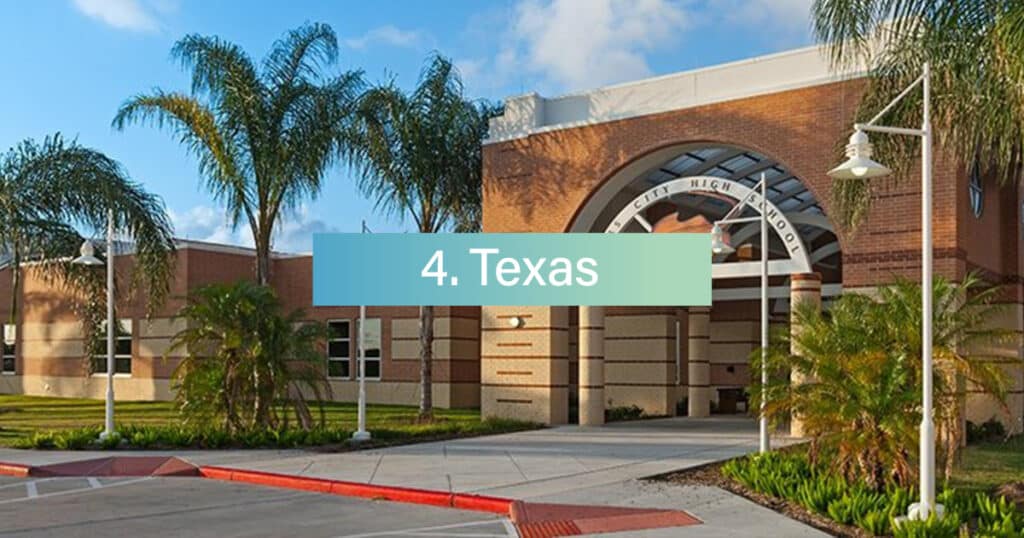
Texas has established itself as one of the most business-friendly states in the USA, attracting companies across technology, energy, manufacturing, and professional services. Its combination of no personal or corporate income tax, a large consumer market, and a competitive cost structure makes it particularly appealing for scaling businesses.
- Texas imposes no personal income tax and no corporate income tax, significantly reducing the tax burden for businesses and their founders.
- The state’s lower cost of living compared to other major business hubs — such as California or New York — helps startups stretch their budgets further.
- Texas is one of the fastest-growing states by population, providing access to a large and diverse workforce as well as an expanding consumer base.
- The state actively supports new businesses through economic development programs, enterprise zones, and industry-specific incentives in sectors like manufacturing, tech, and agriculture.
- Cities such as Austin, Dallas, and Houston have developed vibrant startup ecosystems with access to venture capital, incubators, and industry networks.
Limitation: Texas levies a franchise tax (also called the margins tax) on businesses exceeding a certain revenue threshold. Additionally, property taxes in Texas are among the highest in the nation, which can affect businesses with physical premises.
5. Florida
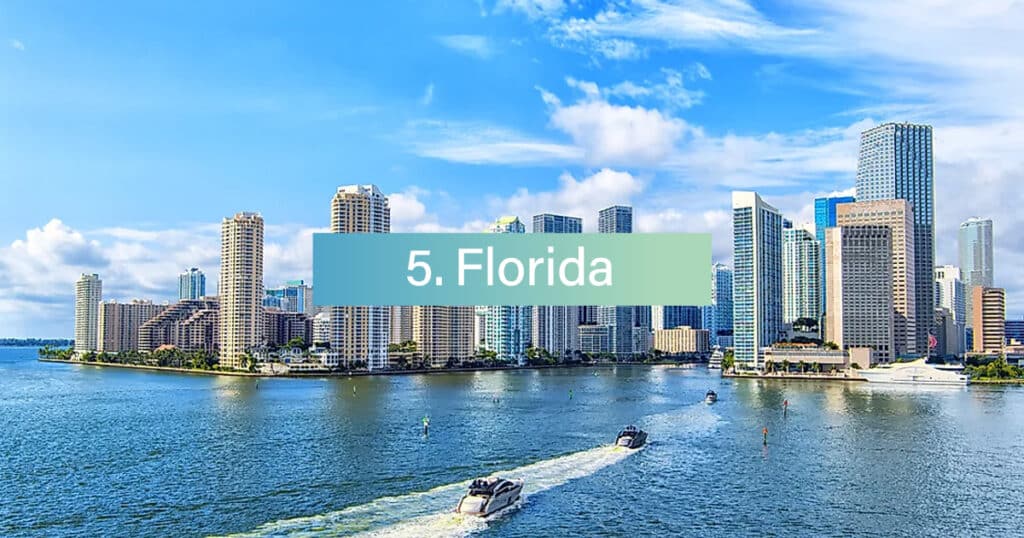
Florida is consistently ranked among the top states for new business formation in the USA, offering an attractive blend of tax benefits, geographic advantages, and a strong economy. Its position as a gateway to Latin American markets makes it especially appealing for businesses with international ambitions.
- Florida charges no personal income tax, which is a major benefit for business owners who draw income through their companies.
- Businesses structured as LLCs in Florida are not subject to state income tax, offering significant savings for small and medium-sized enterprises.
- The corporate income tax rate stands at 5.5%, which is competitive compared to many other economically active states.
- Florida’s geographic location — with major international airports and a network of seaports — makes it a strategic base for companies engaged in import, export, and international trade.
- The state has a large and diverse population of over 22 million, offering access to a substantial consumer market and a broad talent pool across industries such as tourism, healthcare, technology, and finance.
- Florida’s warm climate and quality of life also attract talent from across the country, making recruitment easier for growing businesses.
Limitation: Florida’s commercial real estate costs in major cities such as Miami and Tampa have risen substantially in recent years. Businesses in tourism-dependent sectors may also face revenue volatility tied to seasonal demand.
6. Tennessee

Tennessee has emerged as a compelling option for entrepreneurs looking to balance affordability with economic opportunity. With no individual income tax, low operating costs, and a strong logistics infrastructure, it is especially well-suited for manufacturing, distribution, and service-oriented businesses.
- Tennessee eliminated its Hall income tax on investment income in 2021, meaning individuals pay no state income tax — a meaningful advantage for business owners and investors.
- The state’s cost of living and commercial real estate costs are well below the national average, helping businesses manage overhead expenses effectively.
- Tennessee has a robust road and rail network, making it a strategic location for logistics, warehousing, and distribution operations with access to major markets across the Southeast and Midwest.
- Nashville, Memphis, and Chattanooga have developed into growing business hubs with active entrepreneurial ecosystems, increasing access to local funding and professional services.
- The state has attracted major employers in automotive, healthcare, and technology sectors, expanding the skilled workforce available to smaller businesses in those industries.
Limitation: Tennessee has a relatively high combined sales tax (up to 9.75% state and local), which can affect businesses in retail or consumer goods. The state’s venture capital ecosystem is also less developed than those of Texas or Florida.
Should You Incorporate in Your Home State?
While Delaware, Nevada, Wyoming, Texas, Florida, and Tennessee each offer compelling advantages, many entrepreneurs overlook a simpler and often practical option: incorporating in the state where they live and operate.
Registering in your home state eliminates the need to qualify as a foreign entity in a second state, which involves additional fees and compliance requirements. You will also have a better understanding of local tax laws, licensing requirements, and legal frameworks — reducing the risk of costly compliance mistakes.
For early-stage startups or local service businesses, the home state is frequently the most cost-effective and manageable choice, even if it does not offer the headline tax benefits of states like Wyoming or Nevada.
Conclusion
Choosing the best state to start a business in the USA depends on a range of factors — from your tax priorities and budget constraints to the nature of your industry and your long-term growth plans. Each of the six states covered in this guide offers distinct advantages, and the right choice will depend on what matters most to your specific business.
For expert guidance on company incorporation in the USA or internationally, get in touch with our business formation experts from OnDemand International.
FAQ
What factors help determine the best state to start a business in the USA?
The key factors include business location and market access, alignment with your business plan, preferred business structure (LLC, corporation, etc.), state tax climate, startup and operating costs, local legal environment, and access to a skilled workforce.
Which US states are the most favorable for new businesses?
The six most business-friendly states for startups in the USA are Delaware, Nevada, Wyoming, Texas, Florida, and Tennessee — each offering a unique combination of tax advantages, legal protections, and business support.
Which state has the best tax climate for starting a business?
Wyoming is widely considered one of the most tax-friendly states for business. It charges no personal income tax, no corporate income tax, and only a 4% sales tax. Registration and annual filing fees are among the lowest in the country at $100 and $50, respectively. Nevada is another strong contender, though its annual costs are higher.
Is it better to form an LLC or a corporation in these states?
For most small and medium-sized businesses, an LLC offers the best combination of flexibility, liability protection, and tax simplicity. Corporations are generally preferred by businesses seeking venture capital or planning to go public, as investors often require a traditional corporate structure — particularly a Delaware C-Corp.