
British Columbia (BC) is not just a province known for its stunning landscapes and vibrant cities; it’s also a thriving business hub with vast economic opportunities. Whether you’re a startup, entrepreneur, or an established business looking to expand, BC offers a strategic advantage with its diverse economy, business-friendly policies, and global trade access.
As Canada’s gateway to the Pacific Rim, BC provides seamless connectivity to international markets, making it an ideal location for businesses in technology, natural resources, and tourism. The province’s supportive business ecosystem, government incentives, and better quality of life further enhance its appeal.
If you’re considering company registration in British Columbia, understanding the registration process and choosing the right business structure is crucial. This article will cover the important steps to register a company in BC. Furthermore, it will cover the expected costs and benefits of registering your company in British Columbia.
Why Choose British Columbia for Your Business?
British Columbia is home to more than simply breathtaking scenery and energetic cities; it’s a province brimming with economic potential.
Here are some compelling reasons why BC is an ideal location for your business:
- Diverse Economy: From technology and film production to natural resources and tourism, BC’s economy is as diverse as its geography.
- Strategic Location: Positioned on Canada’s west coast, BC provides easy access to Pacific Rim markets, making it a gateway to international trade.
- Supportive Ecosystem: The province offers numerous grants, funding opportunities, and resources for small businesses and startups.
- Quality of Life: A high standard of living attracts top talent, giving your business a competitive edge in recruitment.
Types of Business Structures in British Columbia
Prior to beginning the registration procedure, it’s essential to choose the right business structure for your firm. Every structure has unique financial and legal ramifications.
- Sole Proprietorship: This is the simplest type of company in Canada, and it does not distinguish between personal and business liabilities.
- Partnership: Ideal for companies with two or more owners. Partnerships can be general or limited, with varying degrees of liability.
- Corporation: A corporation in Canada is a separate legal structure providing limited liability, simpler access to finance, and possible tax advantages.
- Co-operative: Perfect for companies that are owned and operated by a group of people for mutual benefit.
- Limited Liability Partnership (LLP): Frequently utilized by professionals like lawyers and accountants, LLPs provide liability protection for individual partners.
Steps to Register a Company in British Columbia
Registering your company in BC covers numerous steps, all of which are essential to guaranteeing that your company conforms with provincial laws.
Here’s a step-by-step guide:
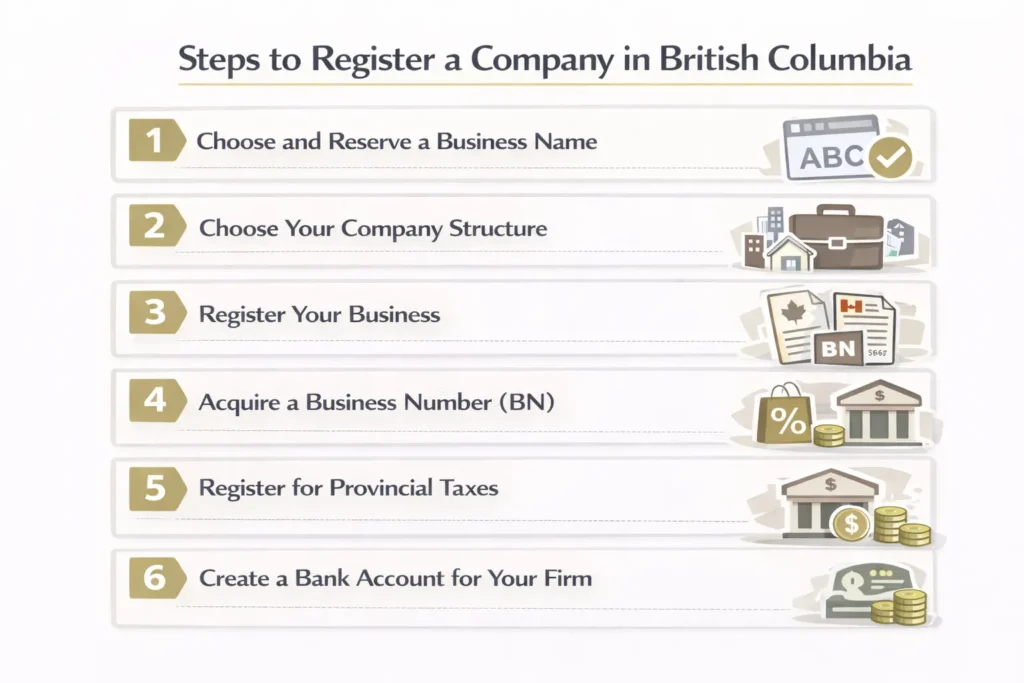
Step 1: Choose and Reserve a Business Name
Use the BC Name Request System to check the availability of your desired business name. The name can be reserved for a maximum of 56 days in order to secure it during the registration process.
Step 2: Choose Your Company Structure
Select the business structure that works best for your company: corporation, partnership, co-operative, limited partnership or sole proprietorship in British Columbia.
You can speak with our Canadian incorporation specialist to choose the structure that works best for your company.
Step 3: Register Your Business
If you’re registering a sole proprietorship or partnership, file your business name with BC Registries and Online Services.
For a corporation, prepare and file the required incorporation documents, including the Notice of Articles and Incorporation Agreement, through BC’s Corporate Registry.
Step 4: Acquire a Business Number (BN)
Enroll for a Business Number through the Canada Revenue Agency (CRA) to facilitate tax accounts such as GST/HST and payroll.
Step 5: Register for Provincial Taxes
If your business collects sales taxes, register for the Provincial Sales Tax (PST) with the BC government.
Step 6: Create a Bank Account for Your Firm
Create a bank account for your firm to distinguish your personal and business finances and ensure financial organization.
What Documents Are Required for Company Registration in British Columbia?
Although the registration process includes particular steps, it is necessary to prepare the proper documentation in advance to prevent delays or rejection.
The documents that are usually required include:
- Approved Business Name Certificate (if using a named company)
- Incorporation Application and Notice of Articles (for corporations)
- Incorporation Agreement signed by incorporators
- BC Registered office and records office address
- Information about Directors and Shareholders, including full legal names and residential addresses
- Share Structure Information in terms of classes and rights of shares
- Legal Identification of directors by a valid Government
Having these documents ready ensures a smoother company registration process in British Columbia.
Legal Requirements for Non-Residents
British Columbia is considered among the most adaptable provinces in Canada to foreign entrepreneurs. However, non-residents should be aware of some of the legal considerations:
No Canadian Residency Requirement for Directors
BC does not need directors to be Canadian residents, as in the case of federal corporations. This makes BC a good destination among international investors.
Registered Office in BC
Each business will be required to have a registered office address in British Columbia.
Business Number (BN) Registration
Non-residents are required to obtain a Business Number from the Canada Revenue Agency (CRA) to be taxed.
Tax Compliance
Corporations operating in Canada must comply with federal and provincial tax regulations, including corporate income tax and, if applicable, GST/PST registration.
Industry-Specific Licensing
There are specific regulated industries that might need extra permits or approvals, regardless of the residency.
Non-residents should seek incorporation and tax advice from our Canadian business incorporation experts to make sure that Canadian laws are complied with fully.
Costs Involved in Company Registration in British Columbia
There are several areas where you may incur costs when establishing a business in British Columbia.
These include:
- Business Name Registration: Ensuring your chosen name is unique and reserving it for your company.
- Company Formation Fees: Filing the necessary documents for incorporation or other structures.
- Licensing and Permits: Securing the required permissions based on your industry and location.
- Corporate Bank Account: Establishing a dedicated account for your business transactions.
- Virtual Office Services: If needed, for businesses without a physical location.
Each of these expenses changes according to the specifics of your company’s operations. You may get in touch with our Canadian incorporation experts to know the complete cost for your business registration.
Benefits of Incorporating Your Business in BC
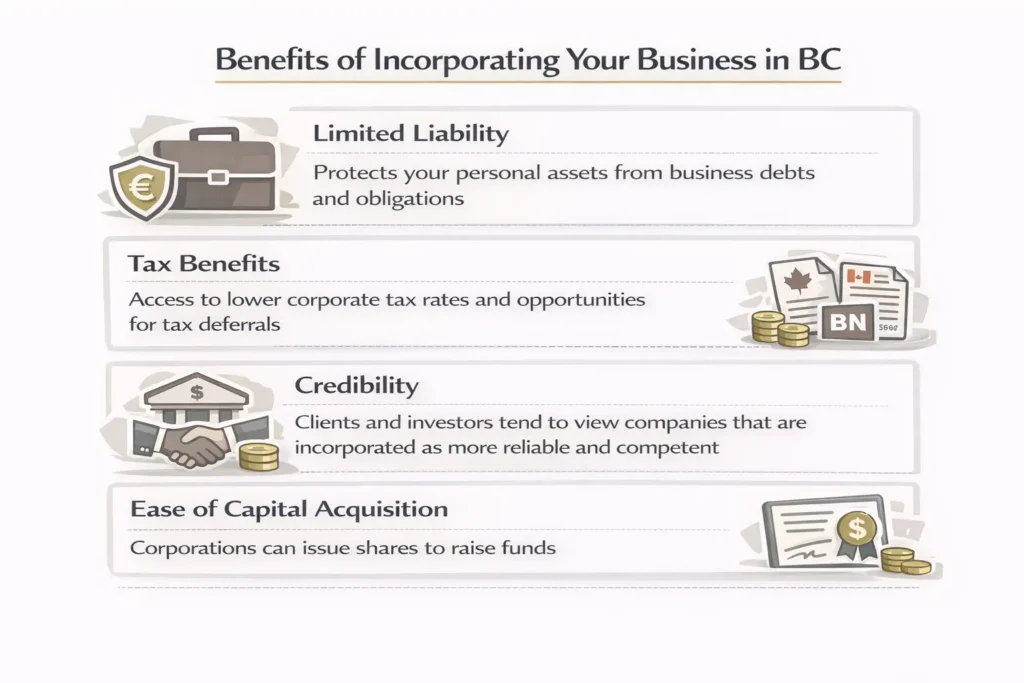
Incorporating your company offers several advantages that can benefit your business, such as:
- Limited Liability: Protects your personal assets from business debts and obligations.
- Tax Benefits: Access to lower corporate tax rates and opportunities for tax deferrals.
- Credibility: Clients and investors tend to view companies that are incorporated as more reliable and competent.
- Ease of Capital Acquisition: Corporations can issue shares to raise funds.
Conclusion
Establishing a business in British Columbia is profitable for entrepreneurs looking to tap into a dynamic and globally connected economy. With its diverse industries, pro-business policies, and access to international markets, BC offers an ideal environment for businesses to thrive.
Incorporation in BC also provides key advantages such as limited liability, tax benefits, and enhanced credibility, making it a worthwhile investment for long-term growth.
Whether you’re a local business owner or an overseas investor, starting your business in BC opens doors to numerous opportunities. If you need expert guidance on business registration, taxation, or compliance, our Canadian incorporation specialists are here to assist you. Get in touch with our Canadian experts today and take the first step toward establishing a business in British Columbia.
FAQ’s
How much time does it take to register a company in British Columbia?
Depending on how complicated your application is and how complete your documents are, the procedure could take a few days to a few weeks.
Can I register a company in BC if I’m not a Canadian citizen?
In British Columbia, non-residents are able to register a business. However, if you plan to incorporate, you might need to designate a local director.
What is the distinction between provincial and federal incorporation?
Provincial incorporation limits your business operations to BC, while federal incorporation allows you to operate across Canada. Based on your firm’s objectives, each has advantages of its own.
What taxes does my firm in British Columbia have to pay?
Your business may need to pay corporate income tax, GST, PST, and payroll taxes, depending on its operations.
Can I register my company online in British Columbia?
Yes, British Columbia offers an online platform for name reservation, incorporation, and business registration, making the process more convenient.