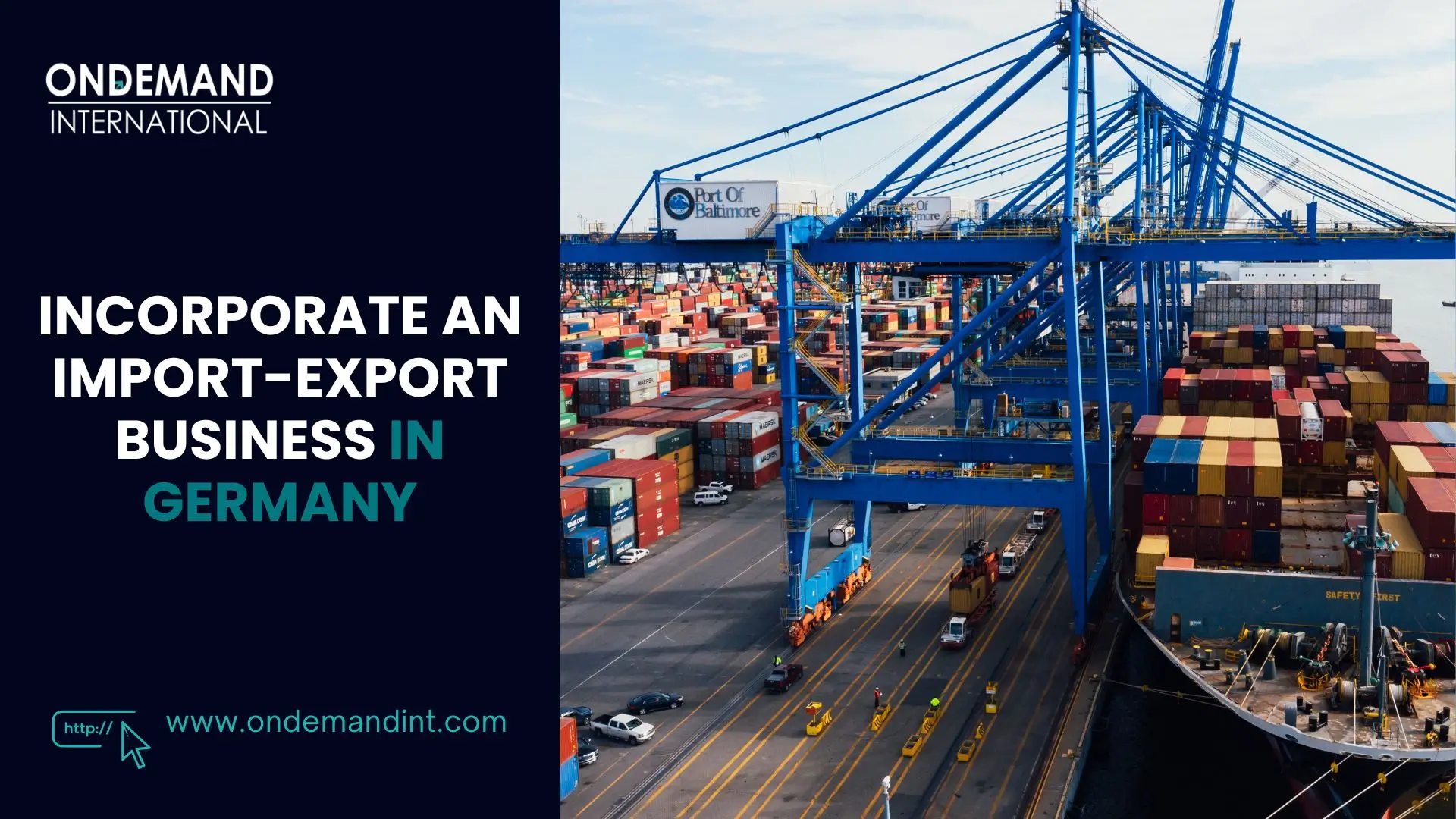
Germany is Europe’s largest economy and a global trade powerhouse, making it an ideal hub for entrepreneurs looking to start an import-export business. Germany provides traders from all over the world with a wealth of prospects due to its advantageous location, strong infrastructure, and business-friendly regulations.
But where do you begin?
And why is Germany such a magnet for global traders?
Through this article, we will be covering the process to start an import-export business in Germany along with the reasons, popular import-export business ideas and top trading partners in Germany.
Why Start an Import-Export Business in Germany?
Listed below are the various reasons for starting an import-export business in Germany:
- Strong Economy – Germany is the 4th largest economy globally, ensuring high demand for imported and exported goods.
- Strategic Location – Centrally located in Europe, Germany provides easy access to over 500 million EU consumers.
- World-Class Infrastructure – Efficient ports (like Hamburg), extensive road networks, and advanced logistics make trade seamless.
- Business-Friendly Policies – Germany supports startups with tax incentives, grants, and a transparent legal framework.
- High Consumer Spending Power – Germans have a strong purchasing power, making it lucrative for exporters.
Popular Import-Export Business Ideas in Germany
Here are the trending sectors in the German import-export business:
Import Business Ideas:
- Organic foods and superfoods
- Exotic fruits and vegetables
- Spices, tea, and coffee
- Handicrafts and ethnic garments
- Electronics and consumer goods
- Ayurvedic or herbal products
Export Business Ideas:
- German auto parts and machinery
- Industrial equipment
- Renewable energy components
- Pharmaceuticals and medical devices
- Specialty German food products (cheese, sausages, beer)
- Eco-friendly products
How to Start an Import-Export Business in Germany?
Follow the steps below to start an import-export business in Germany:
Step 1: Choose Your Legal Structure
The first step involves selecting a legal structure in Germany—either a UG (Mini GmbH) with just €1 capital for startups, or a GmbH with €25,000 capital, ideal for larger, more credible operations.
Step 2: Draft the Articles of Association
Create a notarized document outlining your company’s purpose, shareholder roles, and profit sharing. We assist in drafting and notarizing this to meet all legal requirements.
Step 3: Register with the Commercial Register (Handelsregister)
Register your company with the German Commercial Register via a notary. This legalizes your business and typically takes 1–2 weeks.
Step 4: Open a Business Bank Account
Set up a German business bank accountto manage your finances. If you’re abroad, we can assist with remote account opening through providers like Wise or Payoneer.
Step 5: Deposit Share Capital
Deposit the required capital—€1 for UG or at least €12,500 for GmbH—into your business account to activate your company.
Step 6: Apply for Tax and VAT Identification
Obtain your Steuernummer (Tax ID) and USt-IdNr. (VAT ID). We handle the filings and communication with the local tax office on your behalf.
Step 7: Register for a Trade License (Gewerbeanmeldung)
Officially register your import-export business with the local trade office. We handle this process, which typically takes 3–5 business days.
Step 8: Get an EORI Number for Customs
Register for an EORI number to ensure smooth import and export operations within the EU. This is mandatory for customs clearance.
Top Trading Partners Of Germany
You must be aware of the opportunities in order to develop a successful plan. Germany is one of the world’s top importers and the third-largest exporter.
Here are Germany’s top trading partners:
Top 5 Export Destinations
| Rank | Country | Export Value (in € Billion) | Key Products |
| 1 | United States | €156B+ | Cars, Machines, Pharma |
| 2 | France | €115B+ | Vehicles, Electricals |
| 3 | Netherlands | €110B+ | Chemicals, Electronics |
| 4 | China | €98B+ | Cars, Precision Tools |
| 5 | Poland | €90B+ | Engines, Machinery |
Top 5 Import Sources
| Rank | Country | Import Value (in € Billion) | Key Products |
| 1 | China | €148B+ | Electronics, Machinery |
| 2 | Netherlands | €108B+ | Oil, Chemicals |
| 3 | United States | €88B+ | Medical Equipment |
| 4 | Poland | €82B+ | Auto Parts, Textiles |
| 5 | Italy | €70B+ | Furniture, Fashion |
Conclusion
Germany isn’t just a country — it’s the gateway to global trade. With unmatched infrastructure, a central European location, powerful trading partners, and government support, it’s no wonder global entrepreneurs are setting up shop here. Whether you’re importing wellness products or exporting German engineering marvels, the opportunity is massive — and the time to act is now.
Setting up your import-export business doesn’t have to be complicated. At OnDemand International, we handle every step — from company registration and VAT setup to trade licensing and compliance — so you can focus on growing your business.
Schedule a free consultation with our experts to start your business in Germany today.
FAQ’s
Can I start an import-export business in Germany as a foreigner?
Yes, absolutely! Germany allows full foreign ownership. You can start a UG, GmbH, or even open a branch office without being a German citizen or resident.
Is VAT registration mandatory for import-export companies?
Yes, if your business involves buying or selling goods in Germany or across the EU, VAT registration is legally required. You’ll need a German VAT ID and an EU VAT number for smooth operations.
What is the minimum investment or capital needed?
You can start with just €1 capital by choosing a UG (Mini GmbH) structure. For a GmbH, the minimum capital is €25,000, with €12,500 payable upfront during registration.
What are Germany’s best trading partner countries for new businesses?
Germany trades heavily with the United States, China, France, the Netherlands, and Poland. These markets offer great opportunities for cross-border trade and business growth.