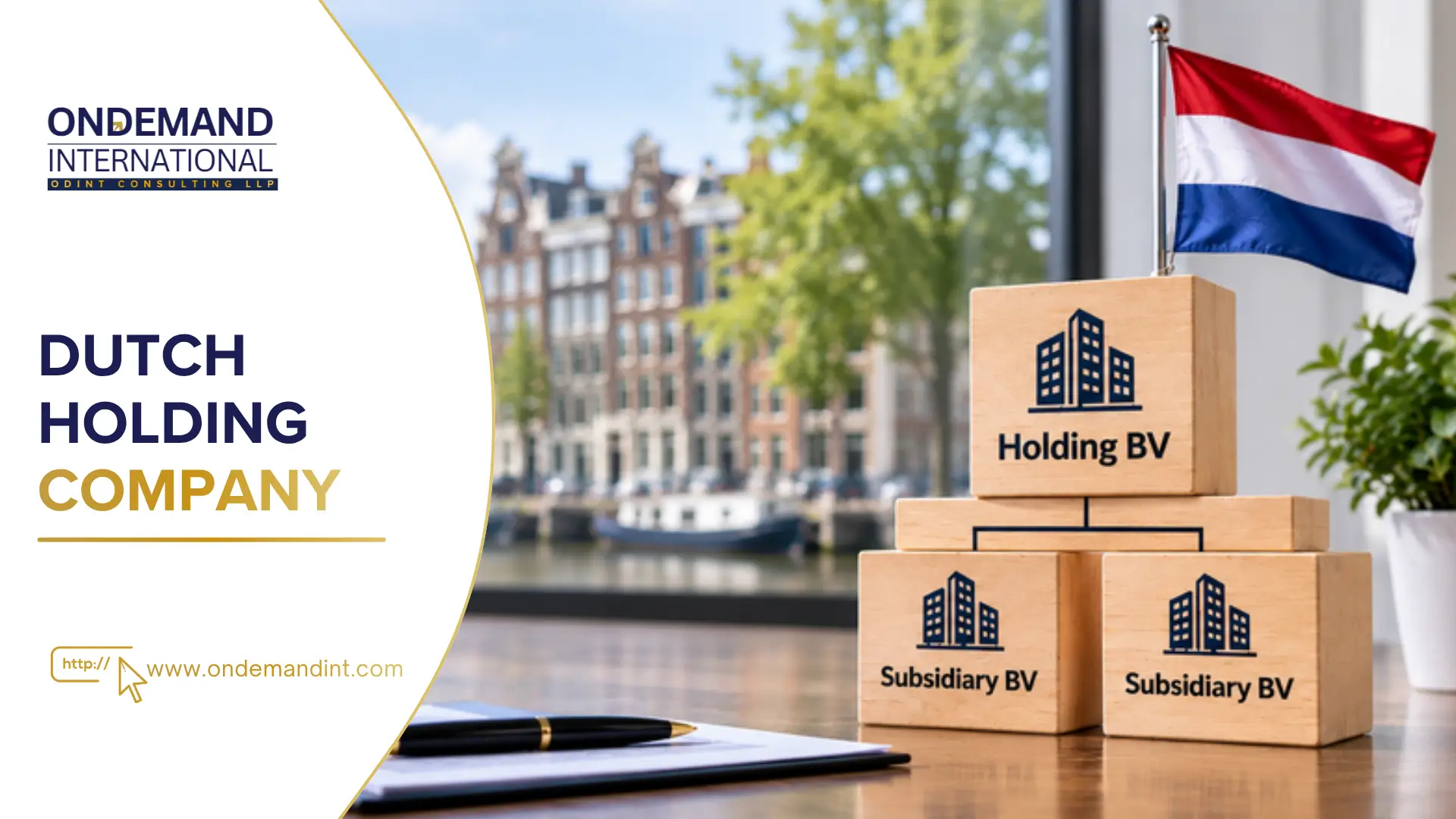
A Dutch holding company is a business structure commonly used by entrepreneurs to manage several businesses, to invest in other companies, and to keep valuable assets apart from daily business duties. In the Netherlands, this is typically a holding BV (parent company) which holds shares in one or more operating BVs (subsidiary companies). It offers a centralized approach to control business ownership, organise investments, and structure business activities.
There are several benefits to setting up a holding company in the Netherlands, such as the possibility of tax benefits according to the Dutch participation exemption, better risk management, and increased flexibility if expanding or selling business activities. Entrepreneurs should be aware, however, of the legal structure, incorporation requirements, documents that must be prepared, and the tax responsibilities connected with establishing a Dutch holding BV.
What is a Dutch holding company?
A Dutch holding firm is a legal entity that mainly holds shares in other companies but not in the actual running of daily business activity. Usually, a holding company is formed in the Netherlands as a private limited company, Besloten Vennootschap (BV). It is the parent company in a company group and may own shares, investments, intellectual property, real estate, and other business assets.
There are two entities in a typical Dutch holding firm structure:
- Holding BV: BV of the parent company that owns shares of subsidiary businesses containing valuable assets, investments, and accumulated profits.
- Operating BV: The subsidiary company that conducts the daily business, including provision of services, sale of products, employment of employees, and entering into commercial contracts.
For example, an entrepreneur may set up a holding BV that owns 100% of the stock in an operating BV. The operating company engages in operations, and the holding company controls the company and holds certain assets. Entrepreneurs can have more than one operating BV owned by a single holding company for different types of business activities.
This type of structure gives business owners the ability to manage their investments and business duties with separate legal entities. Each BV has its own legal and administrative responsibilities; however, asset separation cannot be relied upon to shield against all liabilities, including guarantees, director misconduct, and other exceptions to the rules.
Why Set Up a Holding Company in the Netherlands?
A holding company in the Netherlands can be beneficial for entrepreneurs to make business ownership easier to manage, to manage investments, and to structure financial activities. The Dutch holding structure is especially beneficial for business owners who own several businesses or are looking to enter international markets.
There are several reasons to set up a Dutch holding business:
- Separation of Business Risks: A holding BV and operating BV are two distinct legal entities that help to separate business operations from selected assets and investments.
- Potential Tax Advantages: The Dutch participation exemption may exempt qualifying dividends and capital gains from subsidiary shareholdings from corporate income tax, subject to applicable conditions.
- Centralised Ownership and Management: A holding company helps entrepreneurs to oversee shares, investments, and strategic decisions in various subsidiaries from a single parent company.
- Flexibility When Selling a Business: Entrepreneurs can sell an individual operating company and still hold ownership of other operating companies and investments in the holding company.
- Business Expansion and Investment Management: A holding BV offers a central structure to manage many businesses, investments, and joint ventures through legal entities.
Process for Setting up a Holding Company in the Netherlands
The process for setting up a holding company in the Netherlands is as follows:
1. Choose a Legal Structure for Your Dutch Holding Company:
Identify the appropriate legal structure for your Dutch holding firm. In the Netherlands, the most prevalent legal forms for holding companies include the “Besloten Vennootschap” (BV) and the “Naamloze Vennootschap” (NV). BV is the most popular due to its flexibility.
2. Reserve a Company Name:
Check if your desired company name is available and reserve it at the Trade Register of the Dutch Chamber of Commerce (Kamer van Koophandel or KvK).
3. Appoint Directors and Shareholders:
Appoint at least one director and one shareholder. The director(s) do not need to be residents of the Netherlands, but there should be at least one director who is a resident of an EU or EEA country. Shareholders can be individuals or legal entities.
4. Draft Articles of Association:
Prepare the Articles of Association (statutes) for your holding company. These documents outline the company’s objectives, structure, and management.
5. Capitalization and Bank Account:
Decide on the initial capitalization of your holding company. To open a business bank account in the Netherlands for a BV, it is mandatory to initially deposit a minimum share capital of €0.01.
6. Notarial Deed and Registration:
You must schedule an appointment with a notary in the Netherlands to undergo the notarization process for your Articles of Association. The notary will then register your company with the Dutch Trade Register.
7. Respect tax regulations:
Complete the registration of your holding company with the Dutch Tax and Customs Administration (Belastingdienst). You may be eligible for certain tax treaties and exemptions.
What Documents Are Required to Establish a Dutch Holding Firm?
To establish a Dutch holding corporation, entrepreneurs generally need to provide:
- Identity Documents: Valid passports of shareholders, directors, and UBOs.
- Proof of Address: Recent residential address documents.
- Company Details: Proposed company name and business activities.
- Shareholder and Director Information: Personal details and ownership structure.
- Corporate Documents: Incorporation documents of corporate shareholders, if applicable.
- UBO Information: Details of individuals who ultimately own or control the company.
- Registered Office Address: Proposed Dutch business address.
- Share Capital Details: Information about share capital and ownership distribution.
The Dutch notary may request additional documents, translations, or certifications depending on the company’s ownership structure and the shareholders’ country of residence.
Benefits of a Holding Company in the Netherlands
The list of benefits of a holding company in Holland is mentioned below:
- Tax regime: Holding companies can operate in a tax-friendly environment in the Netherlands. Dutch corporations frequently do not have to withhold tax on dividend payments, which lowers the tax burden on profits transferred within the group. Additionally, corporate income tax is often not applied to capital gains from the sale of subsidiary shareholdings.
- Excellent Infrastructure: The country boasts excellent transportation and communication infrastructure, including ports, airports, and digital connectivity, facilitating trade and business activities.
- Skilled Workforce: The Netherlands has a workforce that is well-educated and experienced, making it a significant asset for businesses in need of specialized talent.
- Attractive Investment Climate: The Netherlands is well-known for its stable political and economic conditions, which make it an appealing destination for international investment. This consistency might help a holding company’s reputation and credibility.
How do you manage your Dutch BV Holding Company?
Once your Dutch BV holding company is established, it’s crucial to understand the ongoing responsibilities:
- Holding and Managing Shares: As a Dutch BV holding company, your primary role is to hold and manage shares in subsidiary companies. Ensure that you maintain accurate records of these shareholdings.
- Tax Compliance: Stay up-to-date with Dutch tax regulations to ensure ongoing compliance for your holding company. This entails fulfilling annual tax return requirements and following transfer pricing regulations.
- Making Strategic Decisions: Use your holding company in the Netherlands strategically to optimize tax benefits and streamline corporate governance across your subsidiaries.
Conclusion
Setting up a Dutch holding company assists entrepreneurs in controlling subsidiaries, safeguarding selected business assets, and structuring investments in the Netherlands. It can help to support long-term business growth with potential tax benefits, risk management, and flexible ownership structures. But selecting the appropriate structure and fulfilling Dutch incorporation and compliance obligations is crucial.
Looking to establish a holding company in the Netherlands? OnDemand International can assist with company formation, documentation, and registration requirements, helping you establish a Dutch holding BV that aligns with your business objectives. Contact our team today to discuss your requirements and get professional guidance on setting up your Dutch holding corporation.
FAQ’s
Is there a limit to the types of investments that a Dutch holding company can make?
Dutch holding companies are generally free to invest in various types of assets and companies. However, some industries may have specific regulations or restrictions.
In the Netherlands, how may a holding company be dissolved or liquidated?
A Dutch holding firm can be dissolved or liquidated in many ways, including declaring bankruptcy if necessary, paying off debts, and transferring assets to shareholders.