Quick answer: To start a sole proprietorship (eenmanszaak) in the Netherlands, choose a business name, fill out the online registration with the Dutch Chamber of Commerce (KvK), and go to an appointment to complete it. The one-time fee is €85.15 in 2026. You are running your own business, but you are personally liable for your business’s debts.
It’s a common choice for freelancers, consultants, and anyone who wants to start small without setting up a private limited company (BV). Registration is fairly simple. Still, check three things before you begin: whether you’re allowed to work in the Netherlands, how you’ll be taxed, and what personal liability means for you. Below, you’ll find who can register, which documents you need, how the process works, and what to weigh up before choosing this structure.
What Is a Sole Proprietorship in the Netherlands?
A sole proprietorship in the Netherlands is a business with no legal personality of its own. In Dutch, it’s called eenmanszaak, literally “one-man business.” Legally, you and the business are the same, so you alone answer for its finances and its debts. “Sole trader” and “sole proprietor” mean the same thing.
You can register only one sole proprietorship. That single business can still trade under several names, cover different activities, and work from more than one location. And despite the name, you’re free to hire employees. Freelancers and ZZP’ers (self-employed people without staff) aren’t separate legal structures either. Most of them register with the KvK as sole proprietors, as the Business.gov.nl guidance explains.
Who Can Start a Sole Proprietorship in the Netherlands?
Anyone can, whether you live in the Netherlands or abroad. The only basic rule is that you must be at least 18.
Your nationality does matter for your right to work, though. EU/EEA and Swiss citizens can generally work as self-employed in the Netherlands. If you are from another country, you will need to obtain a residence permit or visa that allows self-employment. Check the current requirements with the Immigration and Naturalisation Service (IND) before you register, especially if you plan to live in the Netherlands.
There’s no general limit on the kind of business you can run, although some activities need permits or licences.
What Are the Benefits of a Sole Proprietorship in the Netherlands?
Here’s what a Dutch sole proprietorship has going for it:
- Simple administration: The paperwork is lighter than for a company. You still have to keep proper records, but you don’t need to file annual financial statements with the KvK.
- Full control: Every decision is yours, so you have plenty of flexibility. You can also sign contracts in your business name without anyone else’s approval.
- Low startup costs: There’s no notary and no minimum capital requirement. The one-time KvK registration fee is the main official cost, which suits you if you’re starting with limited funds.
- Tax benefits: Your profit is taxed as personal income. If the Tax Administration considers you an entrepreneur, you could benefit from the self-employed deduction, the startup deduction, and the SME profit exemption. The conditions are covered in the tax section below.
- Easy closure: If you decide to stop, you deregister at the KvK and settle up with the Tax Administration.
There’s one downside you should know about: liability. A sole proprietorship isn’t a legal entity, so your private assets, including your savings and your home, can be used to pay business debts. Your partner may be affected too, depending on your relationship status and when you started the business. The official guide on partner liability explains the rules.
What Documents Are Required to Register a Sole Proprietorship in the Netherlands?
You’ll need the following to register:
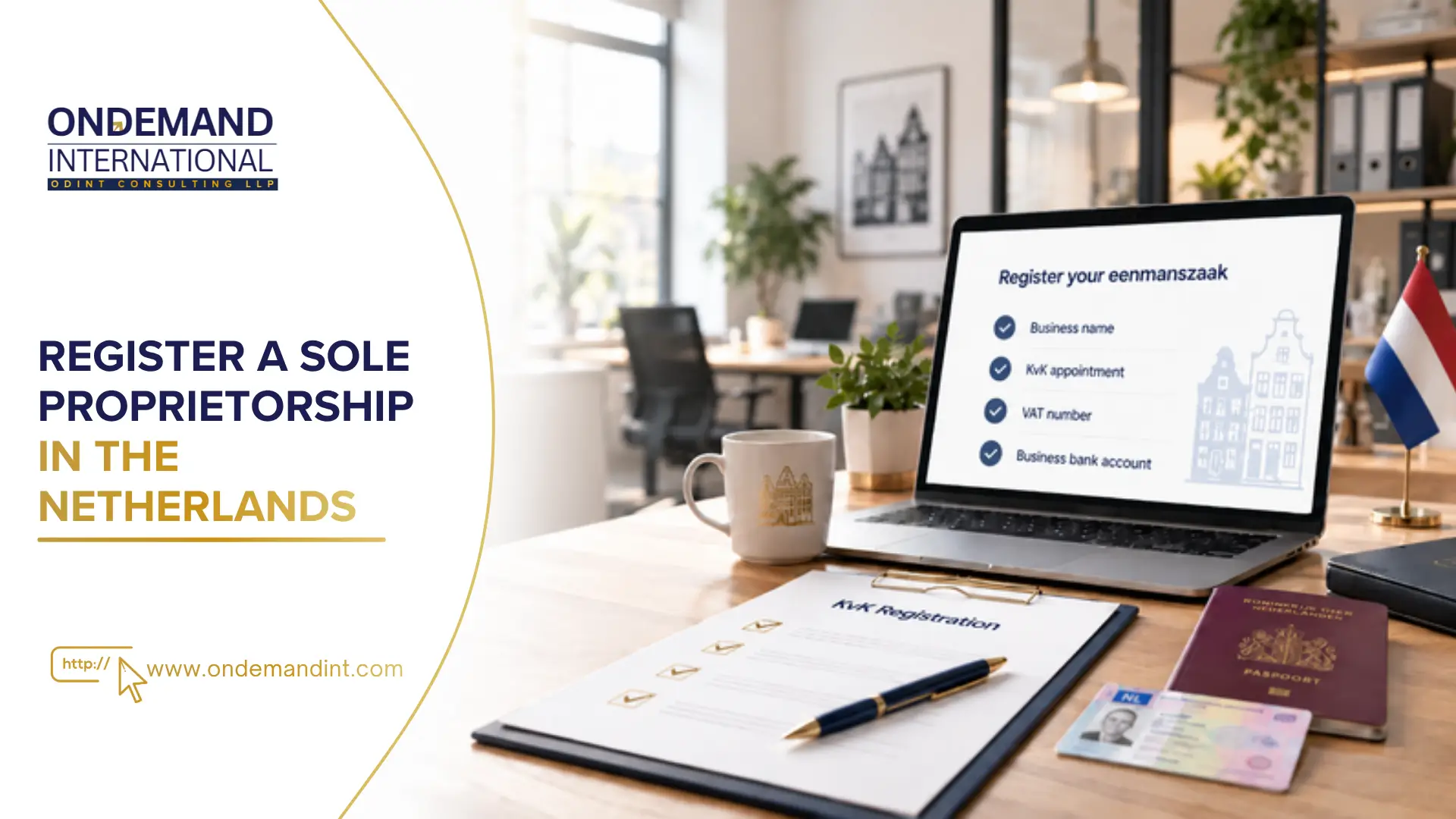
- Valid ID: A valid passport or identity card to prove who you are.
- DigiD: Your digital ID for Dutch government services. You need it to register online.
- Business activities and trade name: A clear description of what your business will do and the name it will trade under. The name shouldn’t be misleading or too similar to an existing business.
- Business address: The KvK normally takes your home address from the municipal records. If your business address is different, you may have to show a lease or similar proof. If privacy matters to you, you can shield your visiting address by registering a separate postal address.
- Permits and licenses: Some activities need them. A restaurant, for example, needs food safety permits and an alcohol licence if it serves alcohol.
- Business plan (recommended): Registration doesn’t require one, but a clear plan of your goals and strategy helps when you deal with banks, look for financing, and plan.
You don’t need to apply for a separate tax number. The KvK passes your details to the Dutch Tax and Customs Administration (Belastingdienst) automatically.
How Do You Register a Sole Proprietorship in the Netherlands?
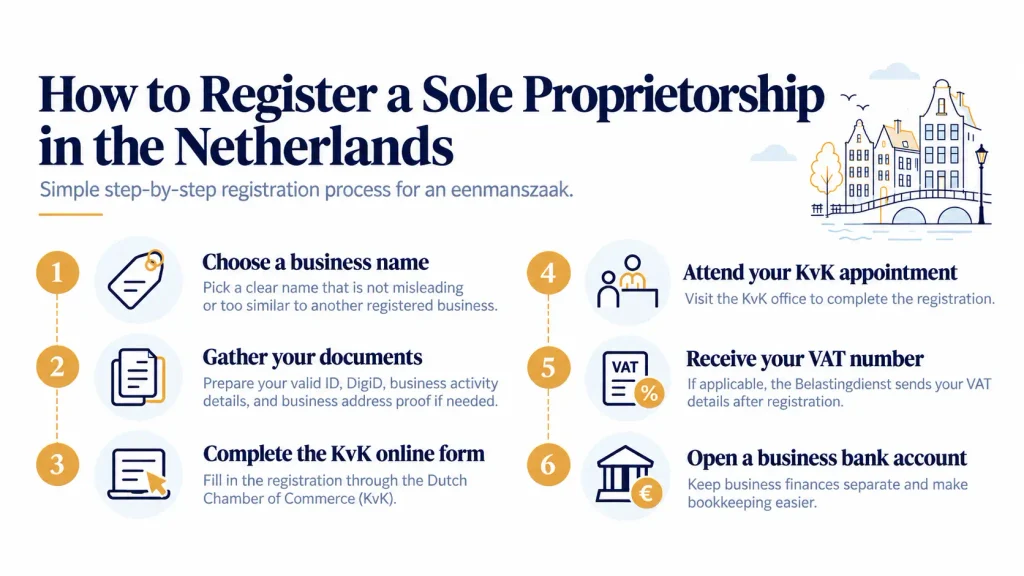
If you have your documents prepared and meet the requirements, proceed with the following steps:
1. Choose a company name
Pick a name for your business. Make sure it isn’t misleading and doesn’t closely resemble the name of a business that’s already registered.
2. Gather your documents
Collect your ID, your DigiD, and proof of your business address.
3. Register with the Chamber of Commerce (KvK)
Log in with your DigiD on the KvK registration page and fill in the online form. After completing the registration, you schedule an appointment at a KvK office. After you pay the one-time registration fee, you receive your KvK number, which you’ll need for your business transactions.
4. Receive your VAT number
Once you’re registered, the KvK sends your details to the Tax Administration, which decides whether you count as a VAT entrepreneur. If you do, your VAT identification number and VAT tax number will be sent via post, typically within two weeks. Put the VAT ID on your invoices and website.
5. Open a business bank account
A separate business account keeps your personal and business money apart and makes bookkeeping easier. Our experts at OnDemand International can help you with opening a business bank account in the Netherlands.
6. Get the permits and licenses you need
You may require permits or licenses depending on your business operations. A restaurant, for instance, needs permits for food safety and for selling alcohol.
How Much Does It Cost to Start a Sole Proprietorship in the Netherlands?
The only mandatory government cost is the one-time KvK registration fee of €85.15 in 2026. Fees change from time to time, so confirm the current amount on the KvK website.
| Cost | Amount |
|---|---|
| KvK registration (one-time) | €85.15 (2026) |
| Notary | Not required |
| Bookkeeper or accountant (optional) | Around €500 to €1,000 per year on average |
| Insurance (optional) | Depends on your business |
The registration fee is paid once. Ongoing costs such as bookkeeping, insurance, and permits are separate, so budget for those as well.
What Taxes Do Sole Proprietors Pay in the Netherlands?
- Income tax: A sole proprietorship doesn’t pay company tax. Your profit is taxed as personal income in Box 1. If you’re recognised as an entrepreneur and spend at least 1,225 hours a year on your business, you can claim entrepreneur allowances. The SME profit exemption can then lower your taxable profit further. These amounts change every year, so check the current figures with the Belastingdienst.
- VAT (BTW): If you’re a VAT entrepreneur, you charge VAT on your sales and file VAT returns. If your turnover is less than €20,000 per year, you can use the small businesses scheme (KOR) and not charge VAT.
- Bookkeeping: You have to keep your business records for at least seven years. They’re the basis for the annual financial statements you use in your tax return, though you don’t file those statements with the KvK.
If you’d like help with your Dutch tax obligations, take a look at our accounting and tax services.
What Is the Difference Between a Sole Proprietorship and a BV in the Netherlands?
It mostly comes down to liability. A sole proprietorship has no legal personality, so you’re personally liable for its debts. A BV (private limited company) is a legal entity, and generally only the company is liable.
| Sole proprietorship | Private limited company (BV) | |
|---|---|---|
| Legal personality | No | Yes |
| Liability | Personal and unlimited | Generally limited to the company |
| Setup | Online registration and KvK appointment | Notarial deed and KvK registration |
| Setup cost | Low | Higher, including notary fees |
| Taxation | Income tax on profit | Corporate tax |
A sole proprietorship works well for freelancers and low-risk small businesses. A BV often makes more sense when the risks are higher, or the profits are bigger. Plenty of entrepreneurs start as sole proprietors and convert to a BV once the business grows. The KvK also has a page on choosing between the two. If a BV looks like the better fit, have a look at our Netherlands company registration service.
Conclusion
Starting a sole proprietorship in the Netherlands is a quick process. You choose a business name, register with the Chamber of Commerce, take care of your taxes, and set up your bookkeeping. None of the steps are hard, but make sure you understand how VAT, permits, record-keeping, and personal liability apply to your business before you commit.
If you want to register a sole proprietorship in the Netherlands, you can talk to the experts at OnDemand International. Our team has years of experience and will help you choose a business name and register your business in line with Dutch law. Contact our team.
FAQ
How much does it cost to register a sole proprietorship in the Netherlands?
The KvK charges a one-time fee of €85.15 in 2026. You don’t need a notary.
Can a foreigner register a sole proprietorship in the Netherlands?
Yes. EU/EEA and Swiss citizens can generally register freely. Other nationals need a residence permit that allows self-employment.
Do I need to register with the tax authority separately?
No. The KvK passes on your details, and if you qualify, your VAT numbers arrive by post.